The policy pays. Only if the family knows it exists.
Benefits go unclaimed and claims stall because beneficiaries cannot find the policy number, the carrier or the paperwork. SmartHeritance gives life insurance providers a way to put those details in the household’s hands while the policyholder is living, and to keep them current.
A benefit nobody claims is a promise nobody sees you keep.
Underwriting, pricing and reserving are solved problems. The unsolved one sits at the other end: the household holds the policy but not the knowledge required to act on it.
What The Beneficiary Actually Has
Known
A vague sense that a policy was taken out, years ago
Missing
Never Discovered
The claim is never filed.
A death occurs, the family does not know a policy exists, and no claim arrives. The obligation stays on the books, ages into dormancy, and eventually escheats to the state.
An unclaimed benefit is a liability that never converts into goodwill
The claim arrives incomplete.
Missing policy numbers, unverified identities and absent documents send the file into a cycle of requests. The family reads administrative delay as reluctance to pay.
Cycle time and rework are driven by what the claimant cannot supply
The relationship ends at the payout.
The beneficiary receives a cheque from a company they have never dealt with, and takes the proceeds elsewhere. The single highest-trust moment in the product produces no second policy.
The beneficiary is the most underserved prospect in the book
Every carrier measures how fast it settles a claim. Far fewer can say how many claims never reached them at all.
$1B+
In life insurance benefits has been matched to beneficiaries through the NAIC Policy Locator, money the families did not know to ask for.
$77B+
Sits in unclaimed property held by US states, insurance proceeds among it. A documentation failure, not an absence of value.
102M
US adults say they need life cover or more of it. The households already on your books are the shortest path to them.
Sources: NAIC Life Insurance Policy Locator; state unclaimed property administrators; LIMRA Insurance Barometer.
Four steps. No core system integration at any of them.
The platform does the collecting and the maintaining. You extend it to policyholders as a benefit of holding cover with you.
Policyholders are invited through a branded link
In a renewal notice, a statement or an agent conversation. We provision the link under your brand; the policyholder verifies by OTP. Nothing touches your policy administration system.
Carrier effort: one message in an existing channel

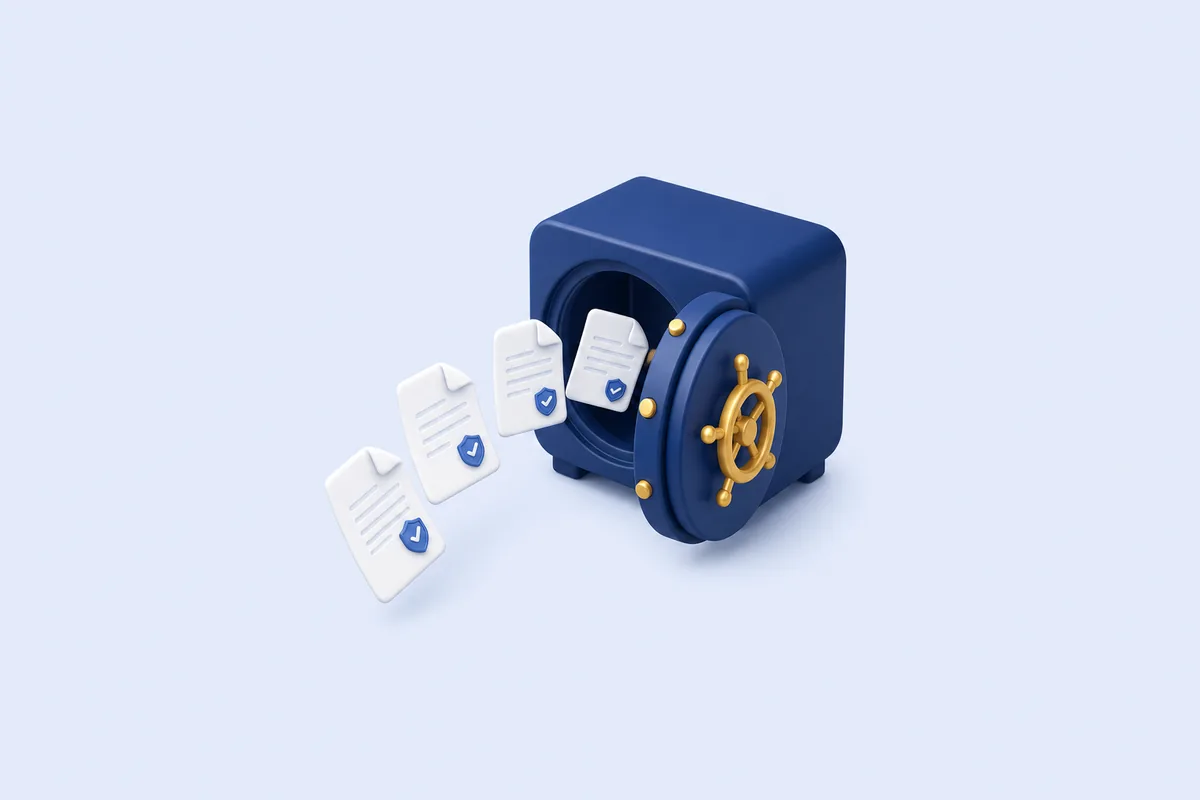
The vault collects and structures what exists
Every policy the household holds, yours and every other carrier's, is located and organised alongside their accounts, deeds and digital holdings. SmartSync keeps the record current as cover changes.
Nothing is created. Everything is located and organised
Material changes surface to you
A new property, a new child, a lapsing policy elsewhere, a revised beneficiary. Each is a substantive reason for an agent to make contact, where the policyholder has granted visibility and only while they maintain it.
Coverage gaps become visible before a competitor finds them

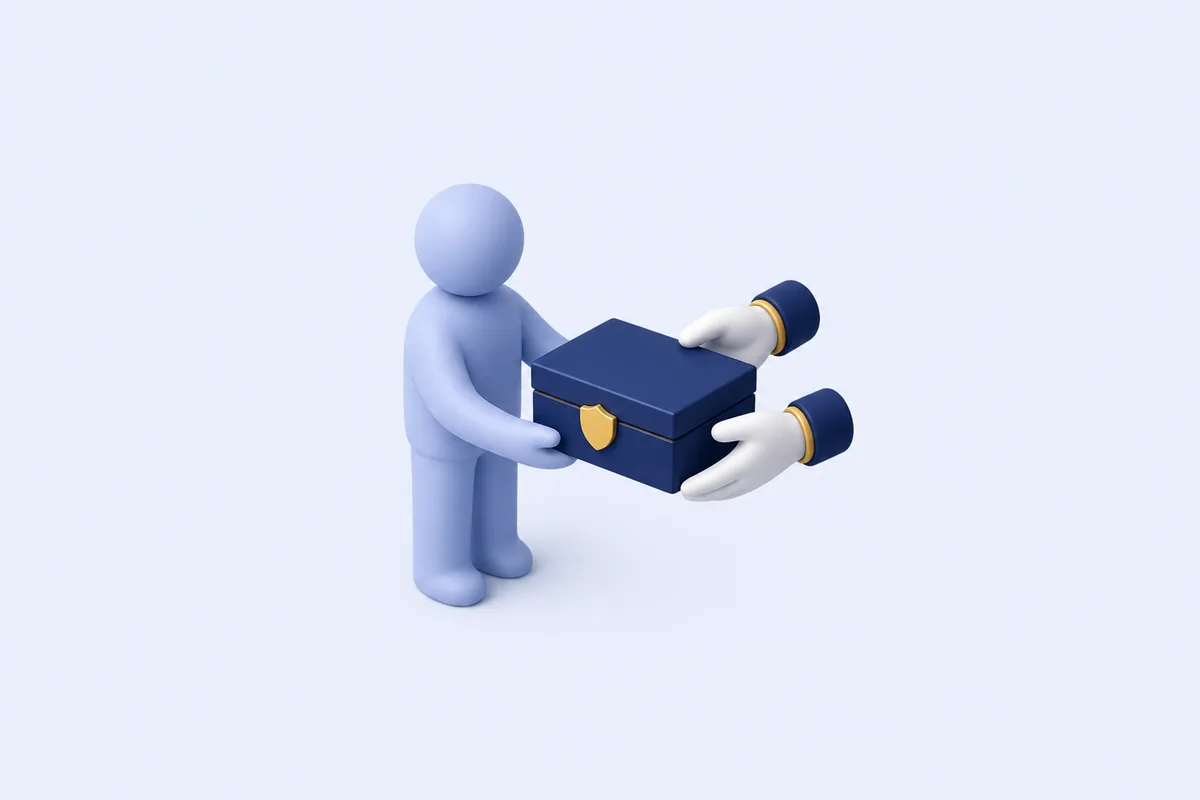
The beneficiary arrives prepared
When the conditions the policyholder defined are verified, the named beneficiary receives the policy details, the carrier contact and the supporting documents. The claim comes to you complete, and it comes to you first.
The claims step, resolved years before the claim

What changes about your book.
Claims arrive, and arrive complete
The beneficiary holds the policy number, the carrier contact and the supporting documents before they ever telephone you. Fewer benefits age into dormancy and escheatment.
Lower cycle time, fewer unclaimed benefits
A reason to speak between renewals
Every material change in a household's records gives an agent a specific, welcome reason to make contact. Engagement stops depending on the billing cycle.
Recurring engagement, and the revenue that follows
Coverage gaps become visible
A household records a new property, a new dependant or cover held with another carrier. Under-insurance surfaces as a fact in the record rather than a guess in a call script.
Cross-sell grounded in the household's own data
The beneficiary becomes a customer
A named beneficiary who is known to you years before the claim, and served well during it, is the most qualified prospect your book contains, and today the most reliably lost.
Retention of proceeds, not just payment of them
A differentiator at the point of sale
Every carrier quotes a premium. Few can tell an applicant their family will be handed the details needed to claim. It is a difference a household understands immediately.
A benefit agents can actually explain
Nothing to build and nothing to unwind
No policy administration integration, no data migration, no change to your claims workflow. A pilot requires a link and an announcement, not a transformation programme.
Assessable within a single quarter
An unfiled claim does not stay a small problem.
A benefit nobody claims travels a predictable path. At each stage it costs more to resolve and returns less to the relationship it was written for.
SmartHeritance intervenes at the first stage, while the policyholder is living and the details can still be confirmed by the person who holds them.
The family does not know
No claim is filed. The obligation sits quietly against the reserve.
The policy ages into dormancy
Contact is lost. Address records decay. Verification becomes materially harder.
Death-record matching surfaces it
Now it is an outreach exercise, a search cost and a regulatory conversation.
The benefit escheats to the state
The money leaves. The goodwill was never earned. The family never learned you paid.
A digital asset vault that aggregates what already exists.
SmartHeritance does not issue policies, underwrite risk or provide advice. It locates the records a household already holds, structures them, and keeps them current, so the knowledge a claim depends on exists before the claim does and stays legible to you where the policyholder permits it.

Cover in force
- Life and disability policies
- Property and casualty cover
- Employer and group schemes
- Carrier, policy number and agent of record
Everything a claim form asks for
Beneficiaries and intent
- Named beneficiaries and contacts
- Release conditions
- Existing advisors and counsel
- Final instructions
Introduces you to the claimant early
Insurable life events
- Property purchases and deeds
- New dependants
- Vehicles and valuables
- Mortgages and outstanding loans
Surfaces under-insurance as it happens
The wider financial picture
- Bank and brokerage accounts
- Retirement plans
- Digital currency positions
- Access and recovery records
Context for the whole household
Begin with a defined pilot, not a procurement cycle.
One segment of policyholders, a fixed period, and measurement on adoption and record completeness. Nothing to integrate and nothing to unwind if the business decides against it.
The first cohort is offered at no cost to the carrier. Commercial terms are scoped once the pilot data is reviewed.
No integration with policy administration, CRM or claims systems
No policies issued, no risk underwritten, no advice provided by us
Visibility granted by the policyholder, revocable by the policyholder
White-label options for carriers, agencies and brokerages
Compliance documentation provided on request
Select the pilot segment
One product line, one region or one agency, typically the segment with the oldest policies in force.
We provision and brand the link
Your brand on the invitation. We supply the announcement copy, the agent script and the policyholder explainer.
Policyholders onboard themselves
OTP verification and guided setup. No carrier or agent time is required beyond sending the invitation.
We review the results together
Enrolment, record completeness and engagement at the close of the pilot. The business decides what follows.
The policyholder owns the record. Always.
What a household records is deeply personal. Access is granted by the policyholder. It is never assumed by a carrier, and never available to our own team.
Bank-Grade Encryption
AES-256 at rest and in transit, the standard applied by major financial institutions.
SOC 2 Type II Certified
Independently audited for security, availability and data integrity. Documentation on request.
Zero-Knowledge Architecture
No SmartHeritance employee can read a household record. Privacy is structural, not procedural.
Condition-Based Release
Records reach a beneficiary only once the policyholder's predefined conditions are verified.
For compliance and legal teams: SmartHeritance is a policyholder-owned record, not an insurance product, a system of record for your business, or a claims adjudication platform. We do not issue policies, underwrite risk or provide advice. Carrier visibility exists only where a policyholder explicitly grants it.
Request Compliance DocumentationMake sure the family knows what you promised to pay.
SmartHeritance works with life and P&C carriers, agencies, brokerages and bancassurance partners. Describe how your book is structured and we will scope the appropriate pilot.
Carrier-sponsored, policyholder-paid and revenue-share models available
Runs alongside your existing technology, not through it
Deploys in days, outside any renewal calendar
Request a pilot
We will walk you through the policyholder experience, the carrier view, and how the pilot is measured.